News & Notes
Not to be Forgiven, a Novel
by Nancy Mayborn Peterson
Colorado Authors League named Not to be Forgiven the BEST MAINSTREAM nOVEL of 2014 . Nancy M. Peterson was presented the Top Hand Award for Book - Adult Fiction - Mainstream last spring.
Out-of-state judges said, "This book slowly, but totally, draws the reader into a world of wartime in America....This is a book that lingers after you've read it."
Judges for the 2014 INDIE BOOK AWARDS competition chose Not to be Forgiven as FINALIST FOR BEST FIRST NOVEL. The national contest is sponsored by the Independent Book Publishing Professionals Group.
The book focuses on the deep and dark emotions World War II aroused, especially in the school children of the time. Our country was at war during my elementary school years, and I long wanted to write about how the ever-present fear and prejudice warped young lives. Being a historian at heart, I wrote about feelings, but I spent two or three years in research to ascertain my story was firmly based on fact.
I interviewed many people who were adults during those years: people who had worked at a prisoner of war camp, Red Cross workers, an Army psychiatrist, farmers who had had German POWs working in their fields, small-town newspaper editors, Japanese-Americans, women whose husbands served overseas, and historians at Denver's Union Station and Fitzsimons Army Hospital, where pivotal scenes take place.
You'll find more information on the page devoted to Not to be Forgiven. Please click at the right.
Author Appearances
Presentation for Parker Area Historical Society
"The WWII Homefront: Fears, foes and Blackout Curtains" was the subject of Nancy Peterson when she spoke for the Parker Area Historical Society at 6:30 Tuesday, September 11. The group meets at the Parker Library, 20105 E. Mainstreet, in Parker. She described the chaos of growing up during WWII and how life changed after the Japanese attacked Pearl Harbor.
Nancy Peterson spoke to the Woman's Interfaith Group about the topic "Forgiveness" in mid November. Reading excerps from Not to be Forgiven, she discussed how Sis Greggory's loyalty to her brother Danny, who was fighting the Germans in North Africa, led her to betray a German prisoner of war she had befriended, an act for which she sought forgiveness the rest of her life. Nancy then led a discussion of the many aspects of forgiveness.
On Nov. 4th, 5th and 6th, Nancy enjoyed meeting readers and signing books at the "Colorado Country Christmas Gift Show" at the Denver Merchandise.
Malley Senior Center Appearance October 25
The Malley Senior Center in Englewood asked Nancy to speak about "The World War II Homefront " and Not to be Forgiven on Tuesday, Oct. 25. She discused what impelled her to write about the WWII era and read excerpts from her book. Her presentation took place from 10 to 11 a.m. with time for questions and comments. She also shared a display of WWII artifacts.
Aurora Museum Foundation Meeting
"The WWII Homefront: Fears, Foes and Blackout Curtains"
The Aurora Museum Foundation's Annual Meeting will feature a talk and book signing by Nancy M. Peterson on Sunday, March 13, at 2:30 p.m. The AMF supports the Aurora History Museum. The AMF flyer states: "Peterson combined research and personal knowledge to recreate the early years on the American Homefront during WWII in her award-winning historical fiction novel. The museum is located at 15051 E. Alameda Pwky. Admission is free. Call 303-730-6660 for information.
"Writing Women's Stories: A Limitless Vein of Gold"
Nancy Mayborn Peterson will be joined by Dr. Marcia Tremmel Goldstein at a Denver Woman's Press Club Salon on Sunday, March 20, from 3:00 to 5:00 pm to discuss why they find writing about historical women so fascinating. Under discussion will be where t0 find women's stories, why you should tell them, how to make them come alive, and tips and strategies on research and interpretation. Refreshments will be served. $5 at the door. RSVP to Corinnejb@aol.com, if possible.
Nancy signed books at the Colorado Country Christmas Gift Show that took place at the Denver Mart Nov. 6-8. She was a participant in the Colorado Authors' League booth. Customers expressed delight that this year's show contained what amounted to a bookstore as 44 Colorado authors displayed their works.
Nancy Peterson appeared at the Oct. 27 meeting of the Applewood Kiwanis Club, which met at the Applewood Golf Club. She read from Not to be Forgiven, showing how the war impacted the Greggory family and the small town of Hiram's Spring, Nebraska in 1942-43.
The Lakewood AAUW opened its 2015-16 season by observing the 70th Anniversary of World War II with Nancy M. Peterson's presention of her prize-winning novel Not to be Forgiven. The book describes how a wartime friendship flares into hatred, leaving scars that cause a lifetime of regret. Members brought mementos from their families' Word War II experiences to add to the author's display of World War II artifacts.
Program Co-Chair Sherry Hitztaler wrote later: I would like to thank you for the wonderful presentation of your book and life during WW II....You provided a very informative and interesting experience for our members and it was most appreciated."
The Smoky Hill United Methodist Church, 19491 E Smoky Hill Rd., was be the site of a discussion about Not to be Forgiven, a novel the details the impact of World War II on one family in a small rural community in the West.
Not to be Forgiven was the featured book at the Windsor Gardens Friday Book Club on Oct. 2. Nancy Peterson discussed why she was driven to write the book and read excerpts from the story.
On Thursday, May 7, the Longmont, Colorado, public library, 409 4th Ave., was the site of Nancy's presentation about her novel Not to be Forgiven. The program included a display of World War II artifacts. She explained why she was driven to write about the WWII home front, how she conducted her research, and read excerpts from the book.
On Monday, Feb. 23, the Bemis Public Library in Littleton, Colorado, presented Nancy M. Peterson's talk about why she decided to write and how she researched Not to be Forgiven. The presentation was well attended despite the foot of snow that had fallen that weekend. Her collection of World War II artifacts was appreciated by those attending.
On Nov. 30, Nancy made a presentation which focused on how she researched the World War II Homefront for her novel Not to be Forgivenfor the Aurora Branch of the American Association of University Women.
On Tuesday, November 18, Nancy was featured speaker at the Feminist Luncheon. The luncheon took place at the Denver Warwick Hotel, 1776 Grant Street in Denver. Her presentation involved reading and signing her World War II novel, Not to be Forgiven.
Nancy's signed books in the Colorado Authors' booth at the 2014 Junior League of Denver Mile High Holiday Mart at the Marriott Denver Tech Center Nov. 14, 15 and 16.
On October 17 & 18, Nancy, as a winner of Best Mainstream Novel, took part in the Colorado Authors' League booth at the Colorado Association of Libraries Convention in the Embassy Suites Hotel at the Ranch in Loveland. She read from Not to be Forgiven at 1 p.m.
Nancy was one of the authors to be part of the Arapahoe Library District Author Open House to be held Saturday, Oct. 4, from 2 to 4 pm at the Southglenn Library in the Streets of Southglenn. Authors were available to sign and discuss their books.
The Capitol Hill Community Center, 1290 Williams, St. in Denver was the site of a presentation by Nancy Peterson on Thursday, Aug. 28th. "Blossom, A Lunch with Friends," hosted her appearance as she gave insights into how her own life was inspiration for Not to Be Forgiven. She also discussed how the war drew women from all walks of life, to bond and support each other.
Nancy spoke at the Ross-University Hills Branch of the Denver Public Library, 4310 E Amherst Ave., on Tuesday, Feb. 11 at 1 pm. . She discussed her World War II novel, Not to be Forgiven, reading from it and describing her sources of research. She also displayed World War II artifacts, signed and sold books.
On Dec. 7, 2013, 72 years after Japanese bombs fell on Pearl Harbor and pulled the United States into World War Ii, Nancy Mayborn Peterson was welcomed warmly but old friends and new when she appeared at the Lied Scottsbluff, Nebraska, Public Library. Though roads were snow-packed and the thermometer stood at 5 degrees, Nancy talked about the why and how Not to be Forgiven came to be written, the the many sources she used to research the book. She read sections of the narrative and enjoyed hearing the experiences of many of those in the audience who had vivid memories of the war.
Novelists Nancy M. Peterson and Barbara Wright spoke about researching and writing historical novels from 3 to 5 p.m. on Sunday, November 10, at the Denver Woman's Press Club, 1325 Logan Street. Their presentation is titled "Finding and Using That Significant Detail."
Nancy related her experience writing Not to be Forgiven, which takes place during World War II in a small town in western Nebraska.
Good News! Renaissance House, imprint of Primer Publishers, has decided to create e-books out of my Western River Series titles. They are People of the Moonshell, People of the Troubled Water, and People of the Old Missury. The titles are now available on Amazon.com, formatted for Kindle.
We are happy to anounce this will make People of the Old Missury, which has been out of print for some time, available again.
####
When Chicago reporter Teresa Dean arrived at Pine Ridge on the Sioux Indian Reservation in 1890,the first words she heard were, "Go home!" "It's too dangerous!" "This is no place for a woman."
Her fellow reporters, all male, all loaded down with rifles and revolvers, were about to have their photo taken, one to send to all their editors back East. The stylishly dressed woman might raise doubts about the grave danger they wrote of daily: they were risking their lives to cover the "Battle of Wounded Knee." She was escorted out of the frame.
Read how Reporter Dean's experiences at Pine Ridge changed her life and her perception of the Sioux in the Nancy Peterson's article "Unwantd Reporter" in the October 2011 issue of Wild West magazine.
####
Chicken Soup for the Soul is reprinting Nancy's essay, "Stepping Out," as promotional material for the book Chicken Soup for the Soul: Empty Nesters published in 2008. The story describes how she and her husband avoided becoming Mr. and Mrs. Curmudgeon after the last chick left for college. To get a new life, they signed up for Western dance lessons and were soon doing Cotton-Eyed Joes and Tush Pushes with the best of them. That led to square dancing and a whole new world. The piece appears in the August 22, 2011 issue of Woman's World magazine.
####
The June 2011 issue of Wild West magazine contains Nancy Peterson's article, "The Huntress and Her Wildlife." It tells the story of Martha Maxwell, who went to Colorado to hunt for gold and discovered a new art that would become her obcession.
Maxwell immersed herself in the study of Colroado's fauna and taught herself to preserve the creatures she collected using the new science of taxidermy. Slight of form but determined in spirit, she learned to shoot and took her daughter and husband on strenuous collection trips in both mountains and plains.
But her preserved birds, rabbits and foxes did not stand stifly on shelves. With her knowledge of nature and artistic talent, she displayed her finds in their natural habitat, the first taxidermist to do so. Grasses and flowers, rocks and brush, pine trees and boulders recreated their accustomed homes. And they were in action. A mountain lion leaped after a deer. A fox peered from a crevice. An eagle perched on a dead limb. People had never seen anything like it.
She quickly earned respect and fame. But her obcession allowed little time for family and relatonshps were strained. In Wild West , read how she struggled to achieve greater fame and make a living as the only female taxidermist in the nation.
####
"Footprints along the Platte" was Nancy Peterson's topic when she spoke to the Windsor Gardens Friday Book Review Club recently.
The slide talk was based on interesting people she discovered when researching and writing People of the Moonshell; A Western River Jounral. The book explores the importance of the Platte River, which became the way West for explorers, pioneers, Pony Express riders, telegraphers, artists, scientists, and railroaders.
Working from diaries, journals, letters and reminiscences, Peterson delves into the experiences of such historical characters as young Dr. Edwin James, the first man to climb Pike's Peak, William N. Byers, who founded the Rocky Mountain News and gold-seeker Molly Sanford, who found life disrupted when her husband went off to fight a Rebel force in Colorado's Civil War.
####
Chicken Soup for the Soul: All in the Family contains Nancy Peterson's essay about her late mother-in-law, Helen A. Peterson, who had a quirk that made the family laugh. The section, "In-Laws and Outlaws," relates adventures of two families learning to live with each other. In an article titled, "To Each Her Own," Nancy describes how Helen, who spent her childhood on the Nebraska prairie in a dugout that her family gradually developed into a house, taught her adult children that "there is more than one way to skin a cat," -- or use a dishwasher. The book is widely available at bookstores and on-line.
####
Nancy Peterson was recently the speaker at Littleton's Bemis Public Library. Her talk focused on three of the women whose stories are told in her book Walking in Two Worlds; Mixed-Blood Indian Women Seeking Their Path.
Half-blood Linda Gruno, whose father was Creek and mother Irish, writes to the author, "I understand how hard it is to be part of two cultures. Unfortunately, one is never quite fully embraced by either one. For my Indian relatives, I am too white. For my white relatives, I am not white enough. For myself, I am just right."
She adds, "I wish this book had been available to me when I was growing up. It would have helped me greatly."
Nancy Peterson recently poke to the Book Ends book club about her book, Walking in Two Worlds; Mixed-Blood Indian Women Seeking Their Path.
She also addressed the Mount Rosa Chapter of the Daughters of the American Revolution, givinge a slide lecture titled "Westering Women." Peterson profiled some of the courageous women who found their destiny along the Platte and Missouri rivers. They included a missionary, a gold-seeker, a homemaker and a Hidatsa Indian girl.
####
Nancy M. Peterson explores the impact of bison on people in the West in the February '09 issue of Wild West magazine. Travelers who explored the West were ever changed by it, and the huge creatures who were awsome enmasse and formmidable as loners challenged their courage and imprinted their memories. None, from trapper Osbourne Russell, who fired 26 bullets into a bull that refused to die, to an emigrant womn who crouched helplessly as bison stampeded through her wagon train, to bespectacled tenderfoot Teddy Roosevelt, who endured days of cold, rain and fog to finally make his kill, ever forgot this monster of the plains.
Peterson also writes of the foresight of the few men who prevented the bisons' extinction, and of modern-day ranchers who are raising the animals in nearly every state of the union. Recent efforts of the U.S. Department of Wildlife to preserve and increase the most genetically pure bison bring the story full circle.
####
Nancy was also asked by Wild West to choose the Wid West's Top Ten Rivers west of the Mississippi. Which would you choose? The Missouri? The Platte? The Rio Grande? The Columbia? What about California's American, where gold was discovered? And do you know why Arizona's Gila River and Utah's City Creek found their place on the list? Does Sand Creek's sigificance make up for its lack of size? And how about the Sweetwater, which enabled pioneers to get across barren Wyoming Basin? And wouldn't the Indians choose the Little Bighorn?
Check the February 2009 issue of Wild West for Nancy's final choices and see if you agree.
####
43rd Annual Neihardt Day Declared a Success
Nancy M. Peterson is keynote speaker
- Around one hundred people sat is the shade of huge cottonwood trees on August 3 in Bancroft, Nebraska, as the John Neihardt State Historic Site honored Nebraska's long-time poet laureate. Neihardt is probably best known for recording Black Elk Speaks, the life story of the Oglala Holy Man.
The museum and education center is dedicated to the life and work of Neihardt and his small studio is preserved nearby. The John G Niehardt Foundation honors the poet's work each August. This year's program, the 43rd Annual state-legislated celebration, featured Nancy M. Peterson as keynote speaker. She spoke about the Missouri River's early history, which she wrote about in her second book, People of the Troubled Water. She shared experiences of trapper John Colter and Mormon immigrant Jane Richards.
She also discussed the Omaha tribe's connection with the white man, Niehardt's friendship with the Joseph LaFlesche family, and the lives of Susette Laflesche Tibbles and Sussn LaFlesche Picotte. The women are profiled in her book, Walking in Two Worlds: Mixed-Blood Indian Women Seeking Their Path.
Also in the 2008 program for John Neihardt Day, was author Tim Anderson, who is working on an authorized biography of Neihardt,and Native American Flutist Garan Coons. Anderson focused on Neihardt's book The River and I , about Neihardt's 1908 trip down the Missouri. Coons performed on the flute and also played a hand drum so the audience could participate in a friendhip round dance.
Ron Hull of Nebraska Educational Television was master of ceremonies. The Nebraska Humanitites Council co-sponsored the program. - Foundation Executive Director Nancy S. Gillis praised Peterson for giving "vivid mental pictures with great emotional connection" to the lives of the people she profiled. "I can't tell you how many wonderful, positive comments we had on your excellent presentation," she wrote later. "Your emotional tie to the peoples of the Great Plains was very evident."
####
Sometimes Nancy Peterson, taking a lighter tone, explores her own history. The just-released Chicken Soup for the Empty Nesters Soul contans her essay "Stepping Out." It describes how she and her husband managed to avoid strangling each other while learning the "ladies underarm turn," and went on to conquer the "Tush Push" and follow the "Tea Cup Chain" to a whole new life without kids at home. Available now in local bookstores.
####
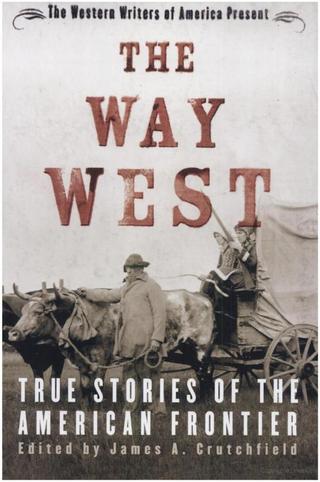
It is listed in Google Book Search.